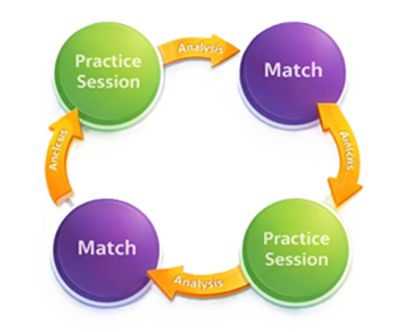
Four Corner Development Model and S-PAM
Performance Analysis Project Components in S-PAM
Performance Analysis as a Project in S-PAM

Performance Analysis as a Project in S-PAM
Performance Analysis Project Components in S-PAM
Performance Analysis as a Project in S-PAM
Performance Analysis Project Components in S-PAM
Performance Analysis Project Components in S-PAM
Applying Tasks as a Functional Component of S-PAM
Applying Tasks as a Functional Component of S-PAM
Applying Tasks as a Functional Component of S-PAM
Applying Tasks as a Functional Component of S-PAM
Required Skills and Knowledge for S-PAM Projects
Applying Tasks as a Functional Component of S-PAM
S-PAM Projects' Outcome and Coaching Methodology
S-PAM Projects' Outcome and Coaching Methodology
Applying Tasks as a Functional Component of S-PAM
S-PAM Projects' Outcome and Coaching Methodology
How Does the Sports Performance Analysis Model (S-PAM) Work?
Within the Sports Performance Analysis Model (S-PAM), performance is understood as a multidimensional, context-dependent process shaped by the interaction among technical, tactical, physical, psychological, and socio-emotional dimensions. Effective performance analysis, therefore, requires more than isolated statistics or technical observations; it calls for a holistic understanding of the multiple dimensions influencing athlete development and team performance.
The Four Corner Development framework divides athlete development into four interconnected areas that collectively influence performance:
Technical/Tactical: This corner focuses on sport-specific skills and their application in competitive environments, covering decision-making, positioning, tactical understanding, movement coordination, and implementation under pressure.
Physical: This corner emphasizes physiological and movement-related demands, including speed, endurance, strength, recovery, workload management, and physical intensity during performance.
Psychological: This corner examines the mental and emotional processes that influence performance, such as concentration, confidence, motivation, resilience, and decision-making under pressure.
Socio-Emotional: This corner focuses on communication, leadership, cooperation, team culture, and coach-athlete relationships within the sporting environment.
The Four Corner Development model provides a holistic evaluation structure that aligns with effective coaching methodology, allowing coaches and analysts to assess performance from multiple perspectives simultaneously. This model enhances contextual interpretation, supports more informed decision-making, strengthens athlete development, and increases the representativeness of performance analysis.
Within S-PAM, the Four Corner Development model is integrated throughout the entire performance analysis process. This integration supports project planning, data collection, analysis, reporting, feedback, and continuous improvement. Coaches and analysts can organize information by developmental area to create more meaningful and balanced performance evaluations. Within S-PAM, the Four Corner Development model serves as a structured, holistic framework for understanding sport performance. By incorporating technical/tactical, physical, psychological, and socio-emotional dimensions into performance analysis, S-PAM promotes more representative, contextual, and meaningful evaluation processes.

Performance Analysis as a Project in S-PAM
Within the Sports Performance Analysis Model (S-PAM), performance analysis is not regarded as an isolated activity or a mere collection of statistics. Rather, it is approached as a structured and organized project focused on athlete development, complete with defined objectives, processes, resources, participants, timelines, and outcomes.
In S-PAM, a performance analysis project shares fundamental characteristics and components with projects in other professional domains such as business, engineering, technology, healthcare, and education. Like any project, it demands planning, organization, communication, coordination, execution, monitoring, and evaluation to fulfill its intended goals related to coaching methodology and athlete development.
Performance analysis projects are formulated to address problems, enhance performance, support decision-making, generate insights, or optimize processes within sport environments. These projects may vary in scale and complexity, encompassing everything from a single-match analysis to long-term organizational performance initiatives.
A performance analysis project within S-PAM typically incorporates many of the core components found in traditional project management structures, such as:
- Project objectives and goals
- Participants and participant roles
- Timelines and project phases
- Data collection systems
- Communication structures
- Risk management processes
- Decision-making frameworks
- Resources and technology
- Reporting and evaluation systems
- Continuous improvement processes
For instance, a soccer team may launch a performance analysis project to refine their defensive transitions throughout a competitive season. This project may include video analysis systems, GPS tracking technology, performance analysts, coaching staff, players, and tactical evaluation criteria. Timelines, reporting structures, communication procedures, and measurable performance indicators are also defined to enhance the coaching methodology. Similarly, another project might prioritize injury prevention and workload management, involving medical staff, physical performance data, recovery-monitoring systems, athlete questionnaires, and risk-assessment frameworks.
Like projects in other fields, performance analysis projects in S-PAM also depend on various assets and supportive structures, such as:
- Databases and performance repositories
- Match and training videos
- GPS and tracking systems
- Tactical models and frameworks
- Dashboards and visualization systems
- Reporting templates
- Communication protocols
- Organizational policies and procedures
- Participant maps and role structures
- Historical performance data
These assets enhance the planning, execution, and evaluation of the project while boosting consistency, efficiency, and the quality of decision-making.
S-PAM acknowledges that performance analysis environments are dynamic and multidisciplinary. Consequently, successful performance analysis projects necessitate coordination between technical, tactical, physical, psychological, socio-emotional, and organizational dimensions. Coaches, analysts, athletes, medical staff, managers, and support personnel all play crucial roles in the project's success in various ways.
By framing performance analysis as a project, S-PAM establishes a more structured, accountable, and systematic framework for understanding and enhancing performance. This perspective transforms performance analysis from a reactive activity into a strategic process that underpins long-term development, learning, and performance optimization. Ultimately, S-PAM positions performance analysis projects as organized systems of people, processes, data, technology, and decision-making collaborating towards meaningful performance outcomes.
Performance Analysis Project Components in S-PAM
Within the Sports Performance Analysis Model (S-PAM), a performance analysis project is viewed as an interconnected system comprising multiple components that work together to enhance athlete development, decision-making, and continuous improvement. Rather than treating performance analysis as isolated observations or disconnected data-collection activities, S-PAM organizes the analysis environment into a structured project framework where people, processes, skills, technology, and performance objectives interact dynamically, all crucial for effective coaching methodology.
The Performance Analysis Project Components in S-PAM represent the foundational structure that supports the planning, execution, interpretation, and application of performance analysis. These components help establish relationships among the performance environment, analytical tasks, essential skills, project life cycle processes, solutions, change management, and performance outcomes.
By integrating these components into one unified system, S-PAM promotes a more holistic and representative approach to performance analysis. This structure allows coaches, analysts, and organizations to better understand how different elements of the project influence one another and contribute to the overall effectiveness of the performance analysis process. Together, these components form the operational and conceptual foundation of performance analysis projects within S-PAM, supporting the transformation of information into meaningful performance solutions that benefit athlete development.

Applying Tasks as a Functional Component of S-PAM
Within the Sports Performance Analysis Model (S-PAM), tasks are structured analytical activities that organize, manage, interpret, and enhance performance analysis processes to support athlete development. These tasks form the operational foundation of the S-PAM framework and facilitate the transformation of performance information into meaningful insights that inform decision-making and coaching methodology.
In S-PAM, tasks are not isolated; they operate as interconnected components within a comprehensive performance analysis system. Each task contributes to specific objectives while interacting with other tasks, participants, data sources, and performance environments. Together, these tasks create a structured workflow that bolsters performance evaluation, communication, learning, planning, and continuous improvement.
The intention behind S-PAM tasks is to provide a systematic approach to performance analysis. Instead of relying on unstructured observations or disconnected statistics, S-PAM organizes analytical activities into clearly defined processes that can be consistently applied across various projects, teams, and sporting environments, all focused on athlete development.
S-PAM tasks support multiple functions within a performance analysis project. Some tasks center on collecting and organizing information, while others focus on interpretation, communication, decision-making, modeling, or evaluation. Certain tasks may be technical and data-oriented, while others emphasize interaction, collaboration, and contextual understanding related to coaching methodology.
Every task plays a specific role within the performance analysis process. Observation tasks help identify behaviors, patterns, and contextual interactions during performance, while Decision Modelling tasks aid in understanding tactical and strategic choices. Participant mapping tasks define relationships, responsibilities, and communication structures among participants, and Terminology Management tasks establish consistent language and definitions across the analysis environment.
S-PAM tasks can be employed independently or integrated within larger performance analysis projects, depending on the objectives and complexity of the environment. In smaller projects, only a few tasks may be needed, while larger initiatives might combine multiple tasks to support comprehensive analysis and enhance organizational coordination.
The operation of S-PAM tasks generally follows a structured process that encompasses identifying objectives, determining required data and resources, collecting and organizing information, analyzing relationships and patterns, interpreting findings within context, communicating results, and facilitating decision-making and continuous improvement—crucial for effective athlete development.
Importantly, S-PAM acknowledges that performance environments are dynamic and interconnected. Therefore, tasks are designed to function in real sporting contexts rather than in isolated theoretical settings. The framework emphasizes representativeness, contextual understanding, collaboration, and adaptability throughout the task process.
S-PAM tasks also foster communication and coordination between coaches, analysts, athletes, medical staff, managers, and other organizational participants. By clearly structuring analytical activities, the framework enhances consistency, accountability, and the practical application of performance insights. Ultimately, S-PAM tasks provide mechanisms through which performance analysis projects are planned, organized, executed, evaluated, and refined. They transform performance analysis from a series of isolated activities into a connected, systematic process that supports meaningful performance development across diverse sports environments.
Required Skills and Knowledge for S-PAM Projects
Within the Sports Performance Analysis Model (S-PAM), effectively managing and operating a performance analysis project requires a blend of technical knowledge, analytical abilities, communication skills, contextual understanding, and project coordination capabilities. Since S-PAM frames performance analysis as a structured, multidimensional project environment, practitioners must possess a diverse range of competencies to enhance both analytical processes and practical decision-making, especially regarding athlete development strategies.
Performance analysis projects in S-PAM are dynamic systems that encompass athletes, coaches, analysts, technology, organizational structures, and performance environments. Thus, effective project operation relies not only on understanding data and analysis methods but also on the ability to integrate information, communicate insights, manage workflows, and adapt to shifting performance conditions, all of which are essential in a robust coaching methodology.
One of the most crucial skill areas in S-PAM is technical and tactical understanding. Coaches and analysts must grasp the sporting environment, tactical principles, performance behaviors, and the contextual demands of competition and training. This insight allows practitioners to interpret performance information in a meaningful way, rather than relying solely on isolated statistics.
Analytical and critical thinking skills are also essential. S-PAM projects necessitate practitioners to identify patterns, relationships, trends, and performance issues across various dimensions of the sporting environment. Analysts must be adept at interpreting information in context and converting raw data into practical information and actionable insights.
Data management and technological competency form fundamental components of performance analysis projects. Practitioners should be well-versed in using video analysis systems, GPS tracking technology, databases, dashboards, visualization tools, and data collection systems. The ability to organize, manage, and interpret information from multiple sources is critical within S-PAM environments.
Equally important are communication and interpersonal skills. Performance analysis projects involve ongoing interaction between coaches, athletes, analysts, medical staff, managers, and other participants. Practitioners must communicate findings clearly, present information effectively, and adapt their communication styles to suit different audiences and environments.
Project management and organizational skills play a significant role in S-PAM as well. Since performance analysis projects encompass timelines, workflows, objectives, participants, and reporting systems, practitioners must effectively plan, coordinate, monitor, and evaluate project activities. Managing resources, prioritizing tasks, and maintaining structured workflows greatly contribute to project success.
Moreover, S-PAM emphasizes the importance of contextual understanding and adaptability. Sporting environments are constantly evolving due to tactical adjustments, player behaviors, competition demands, injuries, and organizational factors. Therefore, analysts and coaches must be flexible, responsive, and able to adapt analytical processes to real performance conditions.
Additionally, decision-making skills are paramount within S-PAM projects. Performance analysis ultimately aims to support action and improvement. Practitioners need to interpret information, evaluate alternatives, and contribute to informed decisions that align with performance objectives, enhancing the overall athlete development experience.
Knowledge areas required for S-PAM projects may include:
- Sport-specific tactical and technical knowledge
- Performance analysis methodologies
- Data interpretation and visualization
- Athlete development principles
- Project management concepts
- Communication and leadership principles
- Technology and analysis software
- Organizational and environmental understanding
- Decision-making processes
- Risk management and evaluation systems
Importantly, S-PAM acknowledges that no individual is expected to possess expertise in every area. Performance analysis projects are collaborative environments where different participants lend their specialized knowledge and skills. Coaches, analysts, sport scientists, medical staff, and organizational leaders each contribute to the project's effectiveness through their unique expertise. The success of an S-PAM project hinges on the integration of knowledge, skills, communication, collaboration, and contextual understanding. These competencies empower practitioners to transform performance analysis into a meaningful, structured, and practical process that fosters long-term performance improvement.
S-PAM Projects' Outcome and Coaching
Within the Sports Performance Analysis Model (S-PAM), the outcomes of performance analysis projects are crafted to enhance coaching methodology in practical and impactful ways. Performance analysis within S-PAM is designed to be integrated seamlessly with coaching practice, emphasizing the importance of bringing analytical insights directly into coaching processes, decision-making, athlete development, and performance improvement.
The results produced through S-PAM projects may include tactical insights, technical observations, physical performance trends, psychological patterns, communication assessments, performance metrics, risk evaluations, and strategic recommendations. These outcomes furnish coaches with structured information that supports informed and contextually relevant coaching decisions.
One of the primary applications of S-PAM project outcomes in coaching methodology is the improvement of training design. Coaches can utilize these analysis findings to pinpoint strengths, weaknesses, tactical inefficiencies, and performance trends within individual athletes or teams. This data enables the crafting of precise training sessions aligned with real performance needs. For instance, if a performance analysis project reveals challenges in defensive transitions, coaches can create practice sessions focused on transition organization, positioning, communication, and decision-making under pressure. Likewise, if the analysis uncovers signs of physical fatigue during specific phases of competition, adjustments to workload management, recovery strategies, or training intensity can be made accordingly.
Additionally, S-PAM project outcomes play a vital role in tactical development and refining game models. Coaches can leverage analytical findings to assess whether tactical principles are effectively applied during competitions, facilitating alignment between coaching methodology and actual performance behaviors observed in training and matches.
An essential application is the provision of athlete feedback and development opportunities. S-PAM outcomes equip coaches with evidence-based insights to support tailored coaching and promote athlete learning. By utilizing structured feedback, video analysis, performance reports, and tactical discussions, athletes are better able to comprehend their performance and identify areas ripe for improvement.
The framework also bolsters decision-making within coaching methodology. Coaches can refer to S-PAM outcomes to make well-informed decisions on team selection, tactical adjustments, player roles, substitutions, workload management, and long-term athlete development planning.
Importantly, S-PAM underscores the need for contextual and representative coaching processes, advocating that coaching methodology should not rely solely on isolated drills or disconnected statistics. Instead, analytical outcomes should be contextualized within the genuine demands of the sporting environment, allowing coaches to design learning experiences and training activities that reflect the complexities and dynamics of competition.
Moreover, S-PAM project outcomes enhance communication and collaboration within coaching environments. Coaches, analysts, medical staff, and organizational team members can utilize structured analytical data to align objectives, coordinate interventions, and enhance collective understanding of performance needs. Examples of how S-PAM outcomes can significantly influence coaching methodology include:
- Modifying tactical structures based on match analysis
- Designing position-specific training activities
- Adjusting physical workload management
- Improving communication and leadership structures
- Developing psychological resilience strategies
- Supporting individualized athlete development plans
- Refining game models and tactical principles
- Enhancing decision-making processes during competition
In S-PAM, coaching methodology becomes increasingly informed, adaptive, and evidence-based through the integration of performance analysis outcomes. The relationship between analysis and coaching is perceived as continuous and interconnected rather than as separate processes. The ultimate goal of utilizing S-PAM project outcomes in coaching methodology is to translate analytical information into actionable coaching strategies that foster learning, athlete development, performance improvement, and long-term success within sport environments.